Wednesday, 24 June 2015

GRAVENSTEEN, GHENT - BELGIUM

GRAVENSTEEN, GHENT - BELGIUM

GRAVENSTEEN, GHENT - BELGIUM
After the death of Philip of Alsace at the Siege of Acre, during his return visit to the Holy Land, The Gravensteen became the permanent seat of the counts of Flanders until the 14th century. After their departure, the castle was used first as the royal mint, then as a courthouse, then as a prison, and finally as a textile factory, before it was abandoned altogether and fell into decay.
Private houses were attached to the castle and a substantial amount of its stonework was removed for use in the construction of other buildings. By the end of the 19th century the castle was a forlorn ruin, and plans to demolish it were announced.
The prospect of losing the historic building, however, galvanised the citizens of Ghent into action. In 1885, the civic authority purchased The Gravensteen and set about an ambitious project that involved the demolition of all the abutting residences and the complete restoration of the keep.
GRAVENSTEEN, GHENT - BELGIUM
Today The Gravensteen has recaptured much of its former glory and, although some Belgians question whether enough of the original castle remains for it to merit its claim to be almost a thousand years old, it has become one of Ghent's prime tourist attractions.
From the top of the keep there is a magnificent view over the city, and inside it there is a memorable, if sometimes ghoulish, exhibition of medieval weaponry and instruments of torture.
After it was reduced to a pile of stones in 1890, The Gravensteen was reconstructed according to ancient drawings, which were not always historically correct – hence the castle is a curious mix of architectural styles. Central to the building is the rectangular keep, with its battlements, and corbeled watchtowers on each , corner. The castle is still partially surrounded at the rear by a medieval moat.
The curtain wall, features several round corbeled, crenellated turrets, the largest with a conical spired roof, and wooden shutters covering window openings. Arrow slits are also incorported in the turrets. The smaller turrets are open at the back, while the larger one is square in section, containing a staircase for access to the different levels.
Passing through the huge gatehouse at the front elevation the visitor is presented with the impressive stone keep, which dominates the castle.
The Gravensteen (Count's Castle in Dutch) was built by Philip of Alsace, Count of Flanders (ruled 1168-91).
It was modelled on the fortifications he had seen when he took part in the Second Crusade (1145-49).
Archaeological excavations have revealed at least one earlier fort, and possibly as many as three previous wooden stockades on this site.

ALHAMBRA, GRANADA, SPAIN

ALHAMBRA, GRANADA, SPAIN


ALHAMBRA, GRANADA, SPAIN
Overlooking Granada, the Alhambra presents a hard and unyielding face to the world, its square towers displaying martial symmetry. This severity is softened when you approach from the back, as terraces of ornate gardens, interspersed with pools of running water, seek to emulate the shady, cool gardens of the Koranic heaven.
After the heat and dryness of North Africa the Moors must have thought they had reached heaven when they conquered Granada. The Sierra Nevada. snow-capped for much of the year, provided the conquerors with water for the fountains and pools that helped to make this corner of Spain paradise on Earth.
ALHAMBRA, GRANADA, SPAIN
The Alhambra is a product of the wars between Christianity and Islam. The Moors of North Africa conquered Spain in 711, but by the beginning of the 13th century their influence had weakened and their 'kingdom' - just a few independent Muslim states in what is now Andalusia - was under pressure from Christian reconquistas. Prince Ibn al-Ahmar, who was driven south from Saragossa, decided to create a new capital at Granada, and began building the fortifications that would keep it safe. For over 200 years the kingdom prospered, and subsequent rulers added to and refined the Alhambra. It was a period of peace that came at a price, however. During this time the Christian kings of Spain were in the ascendancy, and Granada was left in peace only because the Moors paid tributes and sometimes sent troops to fight on the side of the Christians against other, more troublesome, Muslim city states.
At the end of the 15th century the battlements of the Alhambra were called into use when the army of Catholic rulers Ferdinand and Isabella laid siege to Granada. Seven months later this last Muslim stronghold in Spain gave way, and it has remained in Spanish hands ever since.
Typical of Moorish architecture, the palace has a façade that is both commanding and utilitarian, yet hidden within its defensive walls is decoration of enduring beauty. The Alhambra consists of three main parts: the Alcazaba, or fortress; the Generalife, which was the summer palace and actually lies outside the main defensive walls; and the Casa Real, or Royal Palace. The last of these is without doubt the most beautiful part of the Alhambra, many of its rooms decorated with colourful tiles or richly carved stonework, the patterns based on stylized quotes from the Koran.
ALHAMBRA, GRANADA, SPAIN
Within some of these rooms you can still see the fountains or pools of water so prized by the Moors. Numerous small windows overlook shady gardens or the small white houses of the Albaicin district, the old Moorish quarter, parts of which are as old as the Alhambra itself. Spring is a beautiful time to visit, with clear warm days and cool nights. The trees are newly green, the gardens are in flower and the Sierra Nevada, still snow-capped, stands watch over the city. Even better, the Casa Real is not crowded and you can generally get in without queueing or waiting for a slot, as you must in the height of summer, when all the timed entrance tickets are often allocated within an hour of the ticket office opening.
ALHAMBRA, GRANADA, SPAIN
You might also be able to get a room at the Parador de San Francisco, a luxury, state-run hotel in a converted monastery within the gardens of the Alhambra - a tranquil retreat in the evenings when the crowds have gone.
There are many vantage points around the city from which you can get a different perspective on the Alhambra. From the Mirador San Cristobel you will see the Alcazaba against the backdrop of the Sierra Nevada. Walk through the rambling, cobbled streets of Albaicin to the Mirador de San Nicolas and you will see wonderful sunsets that bathe the Alhambra in gLowing red light. From the top of the Sacromonte (the old gypsy quarter, where some gypsies still live in caves carved into the hillside) you will see how the Alhambra towers over the town from its perfect defensive position. And from the hill above the Generalife you can appreciate how much the gardens and water terraces contribute to the Alhambra. Also visible is the massive Palacio de Carlos V, built in the 16th century, after the Christian conquest, on the site of many lesser Moorish buildings. The grounds of this palace are so large that bullfights were once held in the courtyard.
ALHAMBRA, GRANADA, SPAIN
Granada is easily reached by road from Seville or Malaga, two international airports that are well served by some airlines from most parts of Europe. While the Alhambra is seen to advantage from many viewpoints around the city, you can enjoy it at close quarters by staying in its gardens at the luxurious Parador de San Francisco. However, you should book well in advance for the privilege, even in the low season.

TAJ MAHAL, AGRA, INDIA

TAJ MAHAL, AGRA, INDIA

TAJ MAHAL, AGRA, INDIA
 The most evocative views of the Taj Mahal are across the Yamuna River, and getting to the Taj is part of the magic. Although it is quicker to take a boat across, taking a cycle-rickshaw through the village of Katchpura is more atmospheric. In the cool of a pre-dawn morning, you will pass villagers sleeping on low charpoy beds outside their small dwellings, often passing so close that they could reach out and touch you.
On arriving at the fiver you mIght have to share the view with a fisherman or a small herd of water buffalo, but these merely add to the feeling of timelessness. From across the river the Taj MahaL is best seen at sunrise, when the light turns from cold misty blue to any variation of pink, pale gold or orange. The Taj mirrors these colours, eventually reaching a soft creamy white, changing, in turn, to a blinding white in the glare of the midday sun. Those who visit at that time of day often come away disappointed. It is worth visiting at different times over several days to appreciate both the might and grace of the structure as it changes with the light. You'll have to pay to enter the Taj MahaL and grounds, but it currently costs nothing to view it from across the river.
TAJ MAHAL, AGRA, INDIAThe Taj sits on a marble platform with a marble minaret at each corner, and these minarets actually lean out slightly so that they won't fall on the main structure in the event of an earthquake, Each face of the Taj has a giant arch and is decorated with exquisite calligraphy from the Koran and ornate carvings of flowers inlaid with pietra-dura mosaics of semi-precious stones.
The Taj Mahal is set in a relaxed but formal garden complex, with pools of water leading to it from the main gate - a special view that has inspired a generation of photographers, The distance from the gate to the Taj is deceptive and the building seems to grow in both size and stature as you approach.
The Taj Mahal was built in 1632 by Emperor Shah Jahan as a mausoleum for his favourite wife, Mumtaz. Legend has it that he intended to build a duplicate Taj in black marble on the opposite side of the river as his own tomb. In recent years the ruins of foundations and gardens have been discovered there, which seems to support this theory, but the truth will probably never be known. Shah Jahan was overthrown by his son and spent his last days locked up in Agra Fort, just down the river from the Taj.
INFO
TAJ MAHAL, AGRA, INDIA
Agra can be reached by plane or fast train from New Delhi, although the latter has a reputation for pickpockets. The bustling streets of Taj Ganj, just outside the main gate. were once the home of the craftsmen who constructed the Taj. It is now a backpacker's ghetto with very cheap accommodation. Other attractions include the fort in Agra. which has good views down the Yamuna River to the Taj, and also the deserted city of Fatehpur Sikri a few hours away.

Jaisalmer Fort, India the most Beautiful Place

Jaisalmer Fort, India the most Beautiful Place


 Jaisalmer Fort sits in the Thar Desert in the westernmost part of Rajasthan. Located on a former trade route used to transport spices and silks between Arabia and India, Jaisalmer, more than anywhere else in India, appears to have stepped out of the Tales of the Arabian Nights - a collection of ancient folk tales. This is partly due to its location in a remote and inhospitable desert. and partly because of its appearance. Made rich from trade, its merchants built havelis, or merchants houses, with finely detailed windows and balconies that owe more to Arab style than Indian.
Jaisalmer Fort, India the most Beautiful Place
There are bigger and more impressive forts in Rajasthan - such as that at Jodhpur - but few have such an isolated and atmospheric location. Jaisalmer is also reputed to be the only inhabited fort in the world. The maze of tiny streets still rings with daily life, and visitors will often have to push past sacred cows which, unsurprisingly after generations of veneration, act as if they own the place.
The fort, built when the city was founded in 1156, is made up of 99 bastions (projections) linked by battlements that are two walls thick in places. It has seen action a number of times in its history and stone missiles - intended to be hurled down on besieging armies - still sit on top of the battlements. Various city states seemed always to be at war, but the fort was first sacked by Muslim invaders in 1294.
Rajput warriors would never surrender, preferring to ride out to their inevitable death in battle - an act of mass suicide known as johar - while their women and children threw themselves on to fires to preserve their honour. Although the main attraction of Jaisalmer is the fort itself, there are several things you should aim to see before leaving. Taking up two sides of the main square of the fort, the Rajmahal (city palace) of the former maharaja is seven storeys high and from the top you can look out over the town below and far out into the desert.
There is also a group of exquisitely carved Jain temples, some dating back to the 12th century when the fort was built. Within those it is possible to enter there is a subtle play of light and shade on the carvings, making them even more impressive than those on the outside. Built almost 100 years ago, the Gadi Sagar tank used to be the sole source of water for the town. Now often completely dry, it sometimes fills during the monsoon season (around September), and you might be rewarded with the rare sight of the fort seemingly perched above a vast lake.
Although it has endured for nearly 900 years Jaisalmer Fort is currently in danger of collapse. The city authorities blame this on soil shrinkage arising from the excessive use of water by the guest houses in the fort. Hoteliers deny this claim and blame the city authorities for using drainage pipes that are too small for the job. Whatever the cause, there are moves afoot to ban all business from the fort, which will mean that tourists must stay in the town outside and pay to visit the fort for sightseeing. vyhether or not you agree with this strategy, it will certainly change t,he atmosphere of the place for ever.
Although the, camel trains have long gone Jaisalmer remains a trading town, and people come to its market from the villages nearby. Camels, however, still contribute to the town's prosperity as a number of tourist operators offer camel safaris into the surrounding desert.
Jaisalmer Fort, India the most Beautiful PlaceOn the outskirts of the town are the Barra Bagh chatris (royal cenotaphs). These have commanding views over to the fort and offer good vantage points from which to watch the sun set, its last rays turning the town and the fort from the uniform yellow of daytime to a glowing golden hue.
During the peak tourist season (November to January) you can fly to Jaisalmer direct from New Delhi. Outside of these times the airport is closed and you will have to take a night train or a bus from Jodhpur. (There are at least three flights a day from Delhi to Jodhpur.) There are two Heritage hotels in Jaisalmer, the Jawahar Niwas and the Naryan Niwas Palace. The latter has phenomenal views of the fort from its roof.


BELÉM TOWER, LISBON - PORTUGAL

BELÉM TOWER, LISBON - PORTUGAL

BELÉM TOWER, LISBON - PORTUGAL
 During the 16th century, Lisbon played a prominent role in international trade. Because of the established sea routes it became a natural port of call, and King João II devised a plan to protect the city by building three fortresses on the Tagus to form a triangular defence. The king died in 1495, and the building of the tower in the Belém district was left to his successor, Manuel II. Dedicated to the patron saint of the city, St. Vincent, the tower was designed by the architect Francisco de Arruda, recently returned from North Africa, and work was completed in 1520.
BELÉM TOWER, LISBON - PORTUGAL
Francisco de Arruda's Moorish leanings can be seen in the tower's decorative features. In honour of the king, the tower also includes Manueline motifs - carved rope; armillary spheres; and crosses of the Military Order of Christ. The structure comprises the bastion, and the four-storey tower. The bastion housed the cannons and was the first Portuguese fortification to include a two-level gun emplacement. Gaps in the 3.5m (11.5ft) thick walls accommodated 17 large-calibre cannons, while a platform was used to site light-calibre guns.
The tower, 35m (115ft) high, included storage for gunpowder at the lowest level, with the commander's accommodation above. The second storey is flanked by balconies on all sides, while moving upwards there are first a chapel, and then an oratory at the top.
With the passage of time and the construction of more modern fortifications along the Tagus, the Belem Tower lost its prime function of defence and took on roles as a prison, customs post, telegraph office and lighthouse.
BELÉM TOWER, LISBON - PORTUGAL
Constructed as a ceremonial gateway to Lisbon, and as part of a defence system at the entrance of the Tagus river, the 35m (715ft) high tower stands behind the bastion, with its vaulted casemate (gun emplacement), facing the river it was to protect, and providing a beacon for vessels at night.
The façade is highly ornate, displaying Manueline motifs, including shields bearing the Cross of the Order of Christ on the crenetlations of the walls, and on the covered balconies of each wall on the second storey.
The corners of the bastion, and the topmost story of the tower, have delicate guerites (turrets) topped by Moorish cupoloas. The base of the turrets have images of beasts. A loggia on the first story overlooks the bastion, while a terrace surrounding the third storey provides stunning views of the landscape.
BELÉM TOWER, LISBON - PORTUGAL
The tower was built in the early 16th century, during the Age of Discovery, as part of a three-fortress plan to protect the city of Lisbon and its harbour. Constructed in the Portuguese late
Gothic style, the Manueline, it originally stood on an island in the River · Tagus - although the river has since changed course. · Often used as a symbol of Lisbon and of Portugal’s past glories, the tower is now classified as a UNESCO World Heritage site.

Bookmark this place in your "delicious"... or share it with your friends!

Samarkand, Uzbekistan the best Wonderful Place

Samarkand, Uzbekistan the best Wonderful Place

Samarkand, Uzbekistan the best Wonderful Place
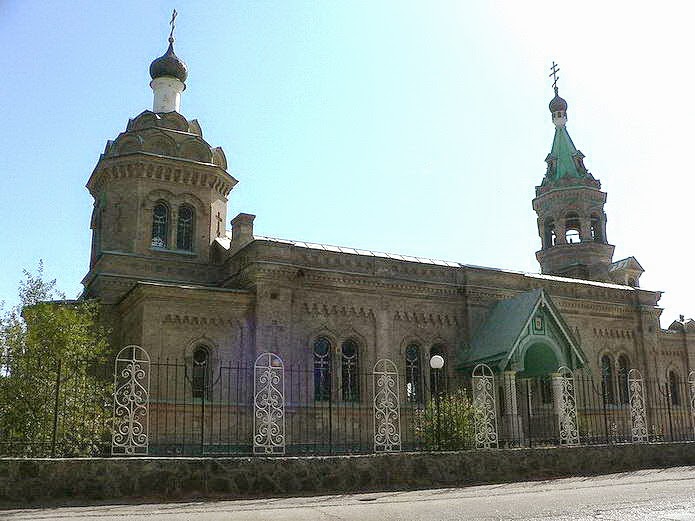
The great city of Samarkand lies on the so-called Silk Road, the ancient trading route that led from China through the Middle East and into Europe. The city grew rich through trade, and constructed some of the finest buildings to be found in the Islamic world. Its strategic position has led Samarkand to be conquered and sacked many times throughout its long and bloody history. The first settlement there was constructed in the 6th century BC and was first conquered by Alexander the Great some 200 years later. As trade routes built up over the next few hundred years, the city grew in power and wealth despite being captured by both the Turks and Hun tribes. Indeed, it continue
Samarkand, Uzbekistan the best Wonderful Place
d to flourish, as recorded by the Buddhist monk and traveller Xuan Zang when he arrived there in AD 630. At this time Samarkand followed the Zoroastrian religion of Persia, but the city fell to Islam when Qutaiba ibn Muslim invaded it in 712. This was the start of the first great period of Islamic development, which was curtailed at the beginning of the 13th century when the city was sacked by the Mongols of Genghis Khan, who slaughtered much of the population.
By the time another great traveller, Marco Polo, arrived at the end of the 13th century the city had been rebuilt, and he sang its praises. The Uzbek national hero, Tamerlane, chose it as the capital of the relatively small region of Transoxiana in 1370 and then proceeded to expand his empire until it reached as far as India and Syria. He was responsible for several great buildings, most notably the Bibi Khanum Mosque. His grandson. Uleg Beg. ruled the city until it fell to nomadic Uzbeks. Uleg Beg's great-grandson, Babur, retook the city in 1512 but was later driven out to India where he founded the Mogul Empire. This was the end of a golden era. Ravaged by earthquakes, looting and changing trade routes, Samarkand eventually succumbed to the Bolsheviks and became part of the Soviet Union in 1924. The ancient centre of Samarkand is the Registan. This square, one of the finest in Asia. is surrounded on three sides by madrasas, or Islamic colleges. Uleg Beg constructed the square and the first madrasa in the 15th century. The fronts of the madrasas are towering façades that lead into ornate courtyards ringed with two storeys of small cells where the religious students lived and studied.
Samarkand, Uzbekistan the best Wonderful Place
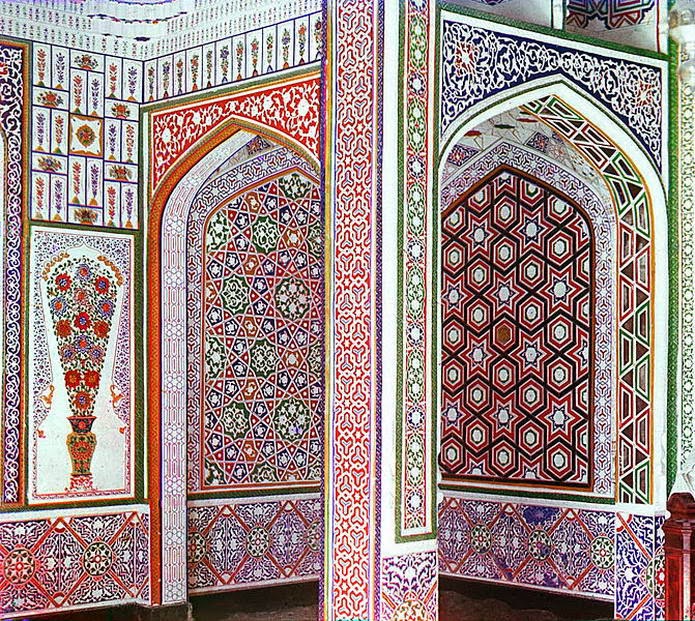
Ironically, for all their anti-religious sentiment and public denigration of Islam, it was the Soviets who restored much of the Registan, straightening precarious minarets and reconstructing the characteristic turquoise-tiled domes. These still shine with an iridescence that perhaps suggests the cool water that is often lacking in this dry land. Islam forbids the representation of living things, so each of the madrasas is covered with ornate patterns (none symmetrical, as this too is forbidden) intricate Kufic quotations from the Koran and inscriptions extolling the magnificence of the buildings. Bizarrely, though, the Shir Dor Madrasa on the eastern side of the square has two representations of lions in front of suns with shining human faces. This apparent heresy is attributed in part to the ego of the governor who built the madrasa and also to the continued influence of the Persian Zoroastrians who revered the power of the sun. The Uleg Beg and Shir Oar madrasas are flanked by minarets, used more for decoration than for calling the faithful to prayer as the buildings were primarily colleges rather than mosques. In Tamerlane's day, however, they were also used for public executions: a favourite way of dealing with criminals was to throw them from the top in a sack.
Samarkand, Uzbekistan the best Wonderful Place
For a couple of dollars, one of the uniformed guards might let you climb the crumbling steps to the top of the north minaret at Ulug Beg Madrasa for one of the most impressive views across the city to the Bibi Khanum Mosque. Tamerlane constructed this vast mosque from the finest materials after sacking the city of Delhi in 1398. In the adjacent bazaar life and trade continue much as they did when the Silk Road brought spices, gold and fabrics to be traded here. You can still buy the round hats worn by many of Uzbekistan's Muslims, decorated flat breads and exotic spices that hark back to the days when peppercorns and saffron were more valuable than gold.
Samarkand, Uzbekistan the best Wonderful Place
INFO
Samarkand is easily reached by bus or air from the capital Tashkent.

Bookmark this place in your "delicious"... or share it with your friends!

lainnya dari Amazing Place, Beautiful place, Historical place, Samarkand, Wonderful place 

Venice, Italy the Wonderful Place

Venice, Italy the Wonderful Place


Venice, Italy the Wonderful Place
No city is more romantic than Venice, and no sight more essentially Venetian than gondolas bobbing on a misty Molo, the waterfront where the Piazza San Marco meets the lagoon. In the very early morning the square is quiet, with only a few commuters disturbing the handful of pigeons that strut imperiously on its worn flagstones. Soon the place will be thronged with both tourists and birds, but for now you can be virtually alone.
Piazza San Marco has been at the centre of the city since it was first constructed in the 16th century, aLthough some of the buiLdings around it date from much earlier. At one end lies the Basilica di San Marco, construction of which began almost 1000 years ago. Squat and strangely shaped, its domed roof looks more Islamic than Christian when seen from the soaring heights of the adjacent campanile, or bell tower. At sunset the façade of the basilica seems to come alive as the mosaics, and even the stone itself, glow in the warm evening light.
Stretching from San Marco down to the waterfront is the Gothic white edifice of the Palazzo Ducale, or Doge's Palace. The doges · ruled the city from AD 697 until Napoleon's troops deposed the last of them in 1797. Although peppered with moralistic statues and carvings that depict such things as the fall of Adam and Eve, and a drunken Noah, the palace is best appreciated from afar, as it would have been by visitors arriving by sea in the days of the doges. Seen from a boat on the lagoon. or even from the top of the campanile on the island of San Giorgio, the façade combines elegance with a feeling of fantasy.
Venice, Italy the Wonderful Place
If the doges wished to portray an impression of piety with the outside of their palace, the inside shows a much more worldly extravagance. Room after room is decorated with the finest gilding and paintings, including works by Titian and Tintoretto. The doges were responsible for the judicial side of Venetian life, and many condemned people were led across the two-lane Bridge of Sighs to the prisons opposite.
Although not, strictly speaking, connected to the Piazza San Marco, the Grand Canal is linked with it. A lazy, sweeping 'S' shape, it cuts through the city, defining it almost as much as the piazza does. The end of the canal opens into the lagoon where it meets the piazza, and the waterfront here is lined with the ubiquitous gondolas.
Venice, Italy the Wonderful Place
As all roads in Venice seem to lead to Piazza San Marco – virtually every street or alley junction has a signpost pointing in that direction - so all canals seem to lead to the Grand Canal. Now used mainly by tourists, gondolas still glide past the palazzos that line its sides.
Venice can be cold and damp during the winter, but this is a perfect time to visit. There are far fewer visitors, hotel prices are lower and, if you are lucky, you might even be there when the water floods Piazza San Marco, forcing locals and tourists on to raised walkways to keep their feet dry. Even in the winter you can experience blue skies and amazingly clear light.
A perfect winter day in Venice has to end with a warming hot chocolate or a typically Venetian spritz cocktail (white wine, lemon peel, a bitter aperitif and seltzer) at Caffe Florian. Founded in 1720, this elegant café, once patronized by Byron and Goethe is decorated with mirrors and murals cracked by years of damp sea air.
Venice, Italy the Wonderful Place
INFO
From Marco Polo airport you can catch a vaporetto (water bus) or water taxi that drops you off at the Molo. Accommodation is expensive and can be hard to find in the peak summer months. The industrial town of Mestre is a short train ride away and offers cheaper options. A network of vaporetti ply the main canals and are a good way to get around. Otherwise, just walk and enjoy the experience of getting lost.